
Why Baggage System Overload Is a Growing Risk for Airports
More people than ever are flying, prompting a continual shift towards automated baggage handling systems. Even with automation, sharper peak travel surges and tighter turnaround windows conditions can lead to BHS overloads, strain, and breakdowns. Without proper maintenance and efficient repair protocols, these issues lead to delays, operational slowdown, and bottlenecks — all of which can become costly if penalties begin to accrue.
To keep baggage systems operating and avoid overloads, airports need high-quality hoists for maintenance and repairs. Read on to learn more about how Thern davit cranes can play a key role in keeping BHS conveyors and tray systems operational or check out Thern’s Logistics & Baggage Handling davit cranes to find the right fit for your facility.
Don’t Forget the Details During BHS Capacity Planning
Capacity planning goes beyond conveyors and speed when it comes to baggage handling (although both are important). There are also lifting, transfer, and maintenance needs that are important to maintaining an efficient, high-functioning baggage handling system. Davits are a good solution for these lifting and positioning jobs, particularly portable davits that offer unique flexibility across the system. High-quality winches can also play a critical role by lifting and lowering conveyors and other components within the system.
Key Pressure Points That Lead to System Overload
There are many variables that can push a high-throughput BHS into overload. Some of these include maintenance or repair jobs, jib lift constraints and placement, equipment downtime, poor load distribution, and safety incidents. While conveyor equipment malfunction is the most obvious culprit for delays, underpowered or poorly optimized lifting equipment can create bottlenecks all their own. Lifting is necessary for keeping up with maintenance, repairs, and replacement of wear items, and when those tasks lag, the entire system can fall behind.
How Davit Cranes Improve Capacity Planning
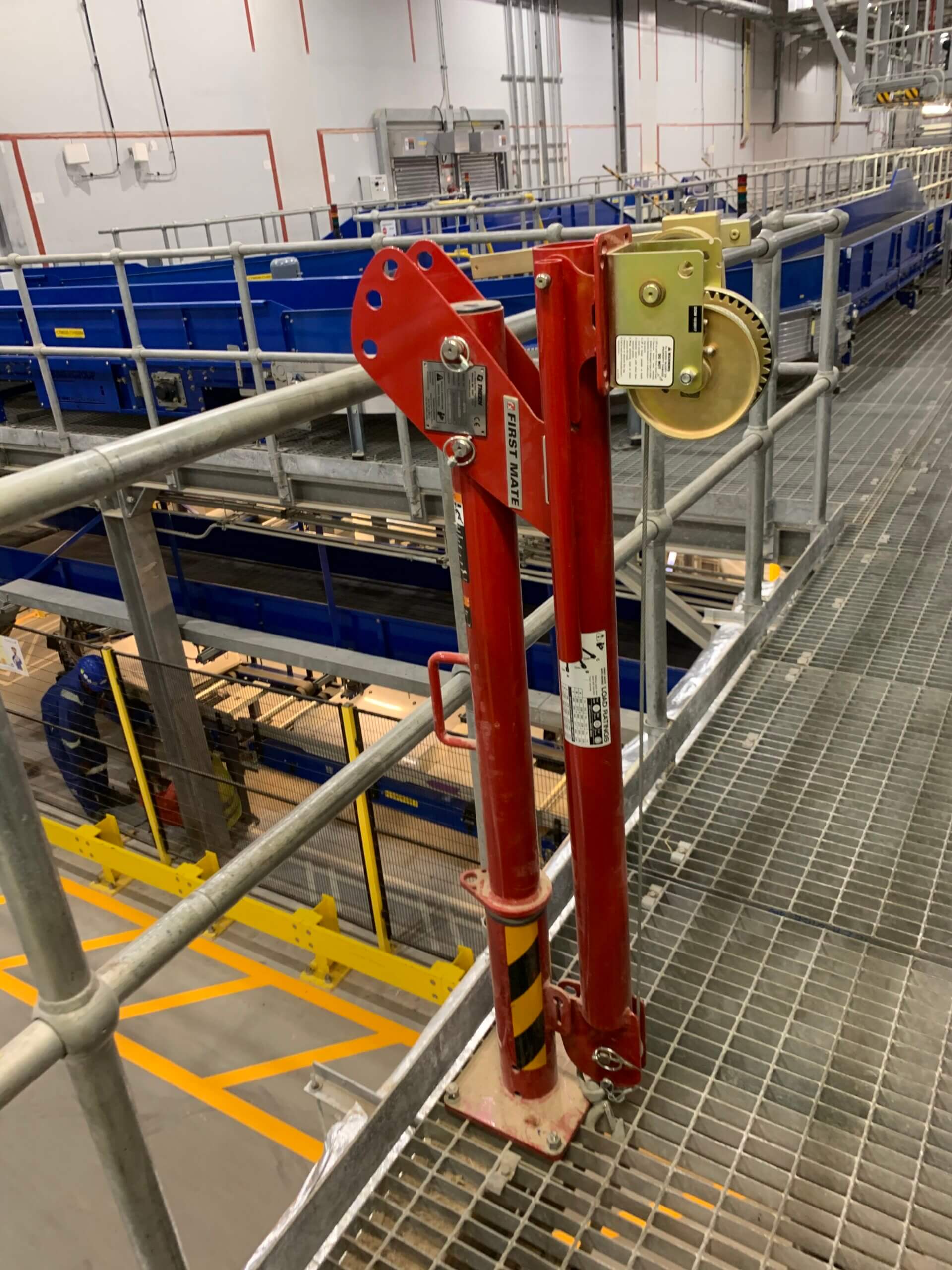
Davit cranes are uniquely suited to operating within an automated baggage system, especially portable davits. By strategically placing hoists throughout the baggage handling facility, they can support improved safety, ergonomics, and more efficient maintenance. Portable davits bring the same benefits while also reducing cost — multiple bases can be installed at various points throughout the facility, allowing a single davit to quickly move when needed for about a quarter of the cost of installing stationary cranes and jibs at each location.
Portable davits also help future-proof capacity planning requirements, providing adaptable solutions for lifting and positioning as needs increase.
Key Factors to Evaluate When Selecting a Davit Crane
When choosing a davit for your baggage handling system, there are a number of considerations to keep in mind, including lifting capacity requirements and accessibility. We’ll cover the basics in the next two sections — for a full breakdown, check out our guide on the topic or reach out to our experts for more information.
Capacity and System Demand Alignment
It is a given that the lifting capacity of the hoist you choose should be more than the heaviest thing that it will need to lift. If your crane is lifting beyond its capacity, the probability for injury, failure, and significantly shortened working lifespan all go up. On the other hand, significantly overspecifying can mean higher costs or could affect duty cycle capabilities, leading to unexpected slowdowns. Always check a hoist’s load charts to ensure you are meeting your lifting capacity needs.
As your facility grows and expands, it’s likely your load capacity needs will change. Using historical baggage data to track the rate of change in volume and load capacity requirements will help you choose a solution that can not only keep your current operation running smoothly, but also integrate seamlessly into future systems.
Accessibility and Ease of Maintenance in High-Traffic Areas
Efficiency is key in high-volume baggage handling systems, especially when it comes to doing maintenance in critical areas. Davit cranes are an excellent solution for these maintenance challenges. Portable davits in particular are one of the most efficient pieces of lifting equipment you can add to your facility, as they are fast and easy to disassemble and reassemble at various bases. This flexibility supports quick access to critical components, resulting in faster maintenance and reduced downtime.
How Smarter Capacity Planning Boosts Long-Term System Performance
As airports evolve, automate, and adapt to the future needs of passengers and their baggage, it’s important to be proactive and forward-thinking in your capacity planning. By developing scalable solutions using flexible equipment, the systems that are built today can be used far into the future, leading to lower cost of ownership and improved long-term outcomes. Integrating lifting equipment and solutions early in the design process, baggage handling systems can be as efficient and effective as possible, now and years in the future.
Planning Ahead for Reliable Baggage Handling Operations
Thoughtful, strategic capacity planning is vital for preventing overloads and protecting overall BHS performance. From layouts to workflows to the equipment utilized in these systems, every aspect needs to be optimized for efficiency and long-term viability. Equipment like well-specified, high-quality hoists can play an important role in supporting efficient, safe, and adaptable baggage handling solutions.
If you are interested in adding davits to your baggage handling system, you can explore our full line of solutions or check out our products that are most often used in baggage handling environments. Not sure what you need or looking for a custom solution? Connect with Thern today and our team of experts will be happy to help.