
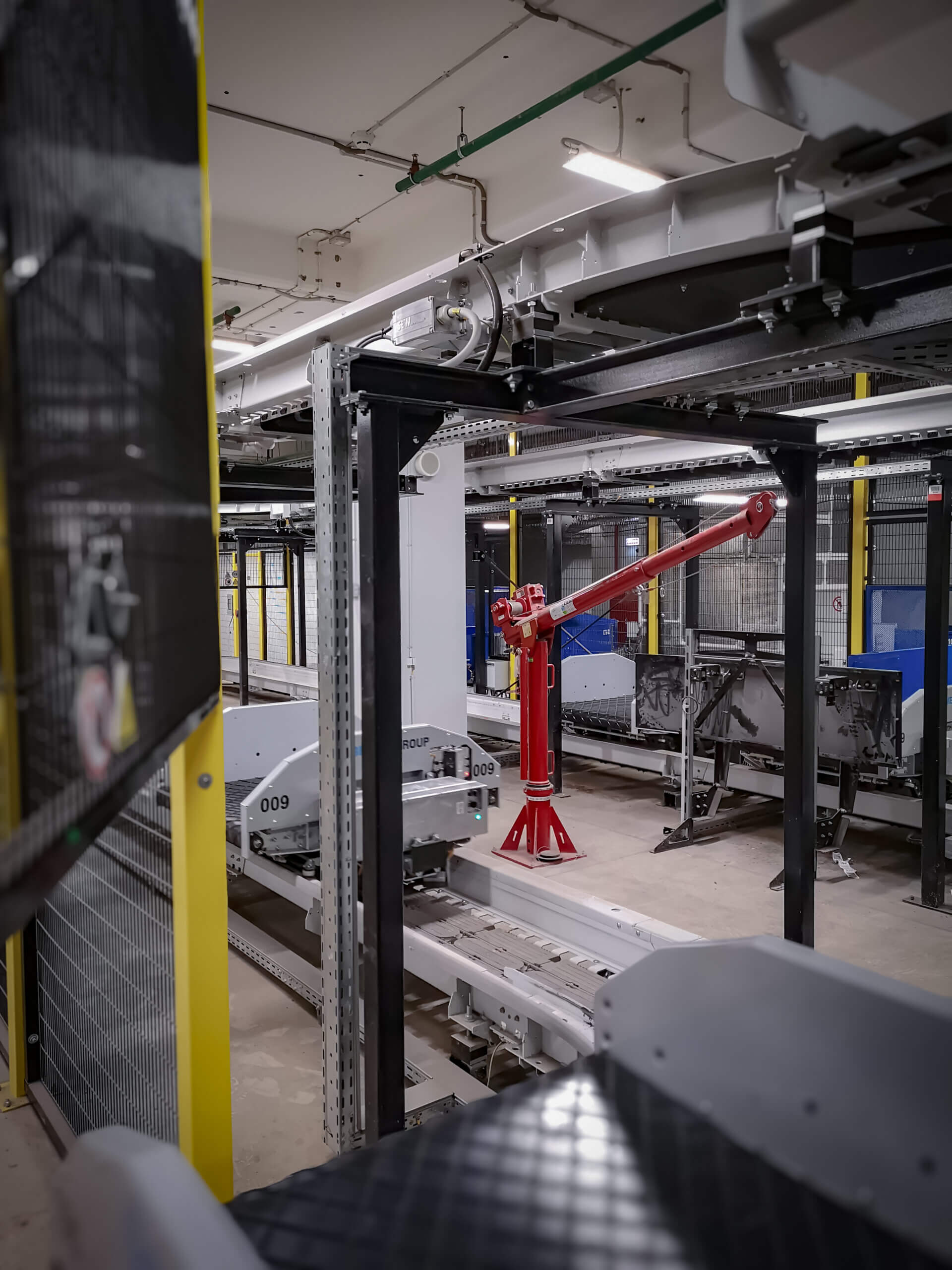
How Davit Cranes Support Reliable Baggage Operations
Baggage needs to get to the right place, on-time, always — this is the challenge facing baggage handling operations professionals every day. Choosing the right equipment to meet these demands is critical for avoiding bottlenecks, processing errors, safety incidents, and costly premature equipment repair or replacement.
High-volume centers including airports and logistics hubs require high-performance, reliable lifting and positioning equipment, such as davit cranes, to maintain maximum uptime, improve safety for workers, and boost efficiency. This is especially true as baggage volumes increase and turnaround windows narrow throughout the travel industry.
Identify the Load and Winch Requirements
The davits used in baggage handling systems must be able to safely and efficiently lift and position any parts or equipment that may be needed during operations, repair, and maintenance tasks. This requires choosing equipment that can handle the heaviest items, as well as various sizes and configurations that may shift the balance of the load. When calculating the maximum load capacity your crane will need to handle, it is also critical to consider the reach and angle that the boom needs to operate within. Boom angle and extension play a key factor in a crane’s lifting capacity — check out the davit’s load charts for specific information on individual cranes.
In addition to load capacity considerations, think about the type of winch to pair with your davit. If you don’t have a power source, there are high-quality manual winch options, including drill driveable worm drive winches. If you do have a power source, Thern has electric winches for various capacity requirements that offer the longest duty cycle in the industry, allowing more lifts per shift.
One thing to always keep in mind when considering load capacity and duty cycle for your lifting equipment: prepare for change. The operational needs of your facility will grow and evolve, making it important to plan for how your equipment may need to adapt. Having a little more capacity than you need right now can minimize expense down the road.
Evaluate Space Constraints and Mounting Conditions
More than likely, your facility will have at least a few spatial and positioning obstacles that you’ll need to overcome. Challenges like low ceilings, other equipment, or tight corridors can all pose unique difficulties. Davits, particularly portable davits, can be highly effective solutions in these situations. There are four mount types for portable davits: flush mount, pedestal mount, rolling bases and wall-mounts. By integrating the correct mix of mounts throughout a working area, portable davits can easily adapt to various applications within a facility while also reducing the number of cranes that need to be purchased. To get this kind of setup correct, collaborate with engineering teams early in the layout design process to ensure that work can get done as quickly, safely, and reliably as possible.
Proper Crane Placement
As mentioned above, the length of the boom during operation is highly impactful on load capacity. Using smart crane placement as close to the load as possible will help you maximize capacity and efficiency while taking boom reach into consideration. Another factor to keep in mind are rotational interferences. Rotational interferences can affect load placement, and, in turn, capacity, making strategic crane placement an important factor in overall performance and minimizing unnecessary strain on workers.
Plan for Durability and Long-Term Performance
Finding a davit that can do the job is important; finding one that can do the job day after day is critical. There are a number of factors that should be considered when choosing a davit, including any potentially corrosive conditions. If these damaging elements are not properly addressed by selecting the right materials for the construction of your crane, you can shorten the operational lifespan of your equipment. For this reason, Thern offers a variety of finishes including powder coat, galvanized, epoxy coated, and 304 and 316 series stainless steel to ensure optimal performance and longevity.
Enhancing Worker Safety
Davit cranes improve worker safety and ergonomics in baggage handling operations by reducing common injuries like lifting sprains and strains and repetitive motion injuries. Tasks like motor replacements, releasing stuck items, lifting repair equipment, and other similar requirements can be safely and reliably performed by davits, rather than putting workers at risk of injury.
Make a Confident Decision That Supports Your Operation
Proper high-volume baggage handling requires lifting and positioning equipment that can keep your facility up and running at peak efficiency. That’s why you need to make smart choices about the airport crane you choose. Davit cranes that are purposefully designed for the load, space, durability, and safety demands of baggage handling systems are capable of enhancing the efficiency and performance of your operation.
Thern has a wide range of premium davits that can be valuable additions to any baggage handling operation — check out our product selector to find the right crane for your space. Not sure where to start? Contact our experts today for assistance finding the perfect davit for your needs.